


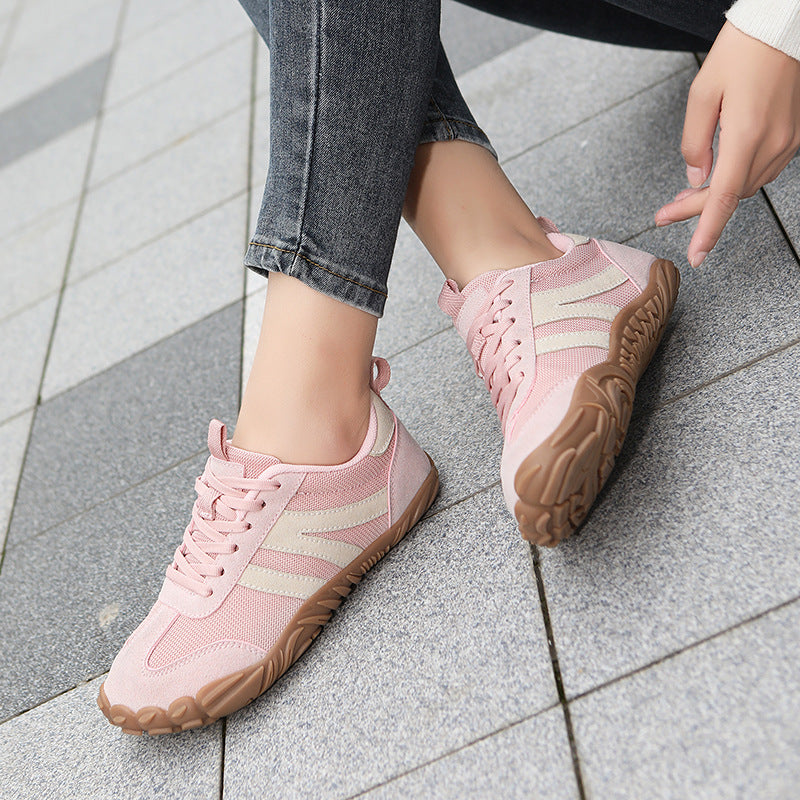
Barefoot Retro Trainers Size & Fit Guide
Unisex Footwear Size Conversion
Use your foot length as the main reference when choosing your size.
| UK Size | Foot Length (cm) |
EU Size |
|---|---|---|
| 3.5 | 23.0 | 36 |
| 4 | 23.5 | 37 |
| 5 | 24.0 | 38 |
| 5.5 | 24.5 | 39 |
| 6.5 | 25.0 | 40 |
| 7 | 25.5 | 41 |
| 8 | 26.0 | 42 |
| 9 | 26.5 | 43 |
| 9.5 | 27.0 | 44 |
| 10.5 | 27.5 | 45 |
| 11 | 28.0 | 46 |
| 12 | 28.5 | 47 |
How to Measure Your Foot
Measure both feet while standing and use the longer measurement.

- Place a sheet of paper on a hard, flat floor.
- Stand with your heel gently against a wall.
- Mark the tip of your longest toe.
- Measure from the wall to the mark.
-

Wide Toe Box
The roomy forefoot gives your toes more space to spread and move naturally, helping the fit feel less restrictive during everyday wear.
-

Natural Foot Movement
The balanced shape allows your feet to move with less restriction, creating a more natural and grounded feel for walking, travel and everyday activities.
-

Flat-Profile Sole
The low, flat-profile sole keeps your feet closer to the ground, creating a more connected feel with every step.
-

Flexible Construction
The flexible sole moves gently with your stride, helping each step feel smoother and less rigid throughout the day.


-BAREFOOT COMFORT
Leave Stiff, Restrictive Shoes Behind
Conventional trainers can feel narrow through the forefoot and rigid underfoot. These retro barefoot-inspired trainers combine a roomy toe box with a flexible, flat-profile sole for a more natural, less restrictive everyday fit.
Breathable mesh helps keep the upper light and airy, while soft suede-look overlays add structure and style. The sole moves gently with your stride, creating a smoother, more connected feel for walking, travel and daily wear.
THE DIFFERENCE
More Room to Move, Less Restriction
Many conventional trainers taper through the forefoot and can feel firmer underfoot. This barefoot-inspired design combines a roomier shape, flexible construction and a flat-profile sole for a less restrictive everyday walking feel.
Designed for walking, travel and daily wear, these trainers give your toes more room to move while maintaining an adjustable, secure fit.
× Conventional Trainers
- Often narrower through the forefoot
- Typically firmer construction
- Higher-profile heel shape
- Less room for natural toe movement

✓ Barefoot-Inspired Trainers
- Roomy toe box
- Flexible construction
- Flat-profile sole
- Closer-to-ground feel


All-Day Comfort, Naturally
✓ Breathable Upper
Mesh panels help keep the trainers feeling light and airy during everyday wear.
✓ Textured Everyday Grip
The patterned rubber outsole provides practical grip across pavements, park paths and light trails.
✓ Everyday Versatility
A flexible lace-up design suited to walking, travel and relaxed daily activities.